Why Watching Athletes
Feels Physical
Mirror neurons, embodied simulation, and what this means for every cycling film you make.
There is a moment watching a rider crest a steep climb. Lungs at capacity. Hands white on the bars. Something happens in your own body. Not your mind. Your body. Your calves tighten. Your breath catches. Something in your chest lifts, or braces, or both.
You haven't moved. You're sitting in a chair, watching a screen.
This isn't a metaphor. It's a measurable neurological event, and understanding it changes how you think about every frame you shoot.
The accidental discovery
In a laboratory in Parma, Italy, in the early 1990s, Giacomo Rizzolatti's team was studying the motor cortex of macaque monkeys. Electrodes implanted in the neurons responsible for hand and mouth movements. The experiment was straightforward: monkey reaches for food, electrode records the firing.
One afternoon, a researcher walked in and reached for a peanut from the monkey's bowl. The electrode fired. The monkey hadn't touched anything. It had only watched.
What they'd stumbled onto were mirror neurons. Cells in the premotor cortex that fire both when we perform an action and when we observe someone else performing it. The brain doesn't cleanly separate doing from watching. At the neural level, they are versions of the same thing.
"The brain doesn't cleanly separate doing from watching. At the neural level, they are versions of the same thing."
From monkey to rider
Human mirror neuron research is more complex. You can't implant electrodes in people's brains for curiosity's sake. But the fMRI evidence is substantial. When people watch skilled movement, their premotor and parietal cortices activate. And the more skilled the observer, the stronger the response.
A trained cyclist watching climbing footage shows different neural patterns to a non-cyclist watching the same footage. You simulate what you know how to do. The mirror system doesn't just register movement. It interprets movement through the lens of your own motor history.
So the people most physically affected by your films are the people who already ride. Not passive spectators. Active simulators. Their nervous system is running a rehearsal of what they're watching, whether they're aware of it or not.
Gallese and the body in the loop
Vittorio Gallese, who worked alongside Rizzolatti, pushed the theory further with what he called embodied simulation. The mirror response isn't limited to motor neurons. When we observe effort, struggle, or physical sensation in another body, we activate not just movement circuits but the interoceptive systems that register physical experience. Breath, strain, temperature, pain.
The body doesn't stay outside the frame. It enters it.
This is why watching a rider's face at the summit, that controlled grimace, can be more physically activating than watching their legs. Faces are the richest source of embodied cues. The brain reads them instantly, automatically, before you've had time to decide anything. You can't opt out. The system runs first.
What triggers the system — and what doesn't
Not all footage activates the system equally. Three things matter more than anything else, and once you understand them, your shot selection changes permanently.
Perspective is the biggest lever. Helmet cams, chest mounts, low tracking shots close to the ground. First-person and near-first-person footage activates embodied simulation far more strongly than wide or aerial views. A drone shot of a rider climbing is visually beautiful. It's also neurologically distant. You can't simulate a perspective that doesn't belong to a body. From 200 metres above, there's no body to simulate.
Proximity follows the same logic. The closer the frame to the subject, the stronger the mirror activation. It's not about emotion. The brain interprets closeness as the conditions in which you would personally be doing the thing. Salt on skin, scratch on bar tape, the focus in someone's eyes. You are inside the action, not watching from outside it.
Sound is the most underestimated trigger of the three. The auditory system processes faster than the visual. Chain noise, tyres on gravel, breathing. These reach the motor cortex before the image has fully registered. Sound isn't support for the picture. Sound sets the physical state that the picture arrives into. A rider's breathing before you see their face primes your body to receive their effort.
near-POV
(ground level)
expression
follow cam
compressed follow
The paradox of the polished film
The brief that says "we want it to feel cinematic" often produces the least physically resonant content.
Cinematic tends to mean wide lenses, aerial moves, sweeping vistas, perfect light, clean edit. All beautiful. All the conditions in which the mirror system quietly disengages. You're watching a film about a cyclist. Not, even for a second, being one.
The shaky GoPro of a solo training ride in the rain often gets more visceral response. More comments, more saves, more I felt that reactions. Not because people prefer poor production values. Because the vibration, the breathing, the close proximity are all signals to the mirror system that this is a body in the world. And a body could be yours.
This isn't an argument for lower production values. It's an argument for understanding what each production choice does to your viewer's nervous system, then making those choices deliberately rather than just aesthetically.
The question to carry into every shoot
Is this a body's view of the world, or a camera's view of the world?
They're different things. A body has weight, inertia, breath, proprioception. A camera has none of those unless you give them to it. Mount position, proximity, sound design, handheld texture. Every choice that adds physical quality to footage closes the gap between observer and participant.
Your audience doesn't just want to watch great athletes. They want to feel, briefly and safely, like they could be one. The mirror system is the mechanism for that. It runs before conscious thought, before aesthetic judgement, before they've decided if they even like the film.
Understand it. Shoot for it.
The primary source — Rizzolatti explaining his own discovery without the layers of popularisation that distort most accounts. Dense in places, but the chapters on sport and action observation repay the effort twice over. Read this before you read anyone else's interpretation of it.
The best accessible account of how much of our mental life happens below conscious awareness. The sections on automaticity are directly relevant to why trained athletes respond differently to sport footage than non-athletes — and why your most engaged viewers feel the most.
Ramachandran championed mirror neurons before the mainstream caught up and coined the phrase "the Dalai Lama neurons." This book has the most vivid explanation of what it actually means that watching and doing share a neural substrate — and the implications for empathy, art, and film.
Optimal experience and the psychology of peak physical states. Directly relevant to what your audience is vicariously seeking when they watch great athletes — not just effort, but the state of complete absorption. Understanding flow helps you film for it rather than around it.
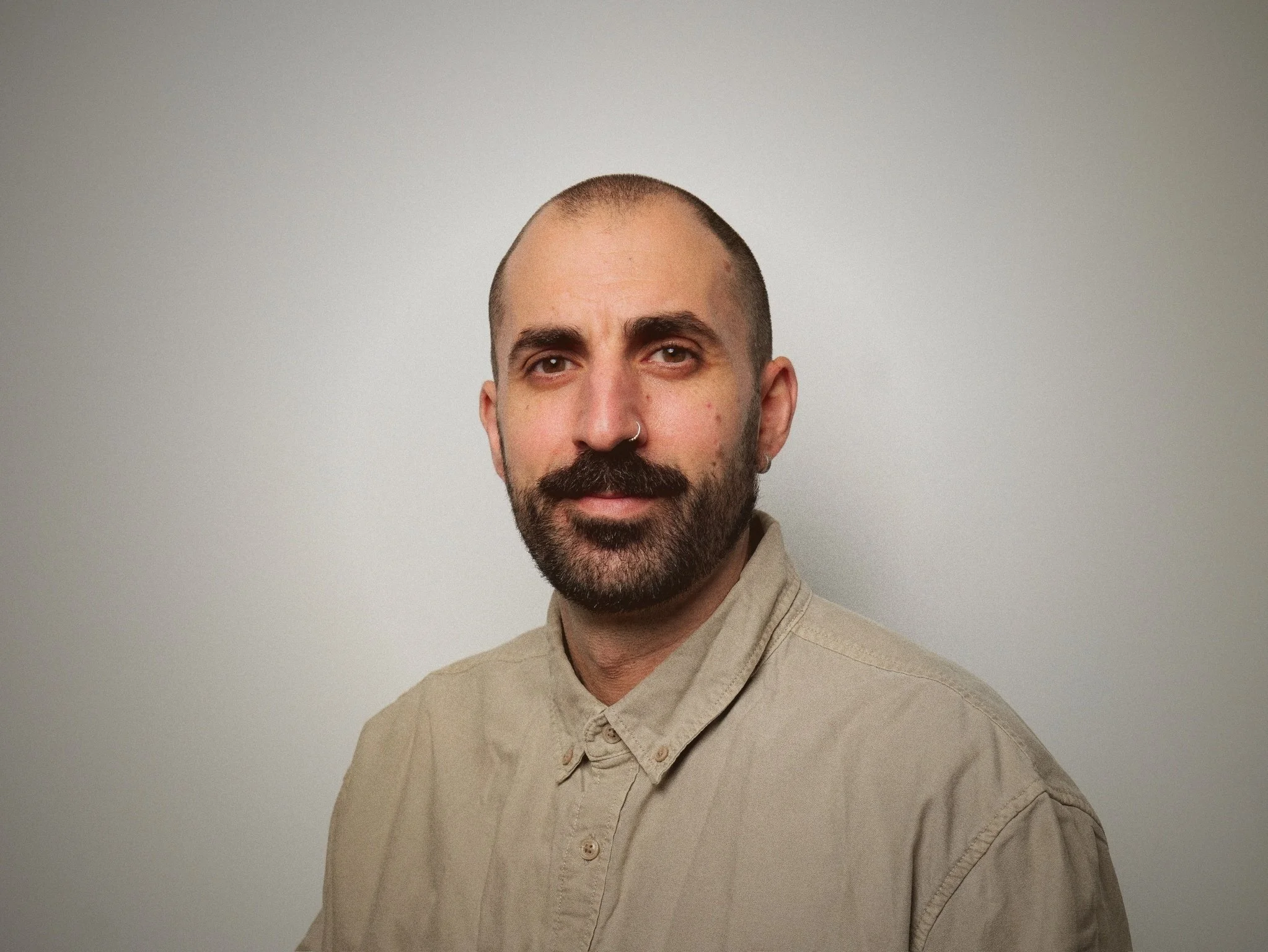
I shoot films for cycling brands, athletes, and events across the UK and Europe. My background is in photography, which means I came to video late and had to unlearn a lot of instincts. These articles are what I wish someone had told me earlier. fairfordstudios.co.uk
- di Pellegrino, G., Fadiga, L., Fogassi, L., Gallese, V., & Rizzolatti, G. (1992). Understanding motor events: a neurophysiological study. Experimental Brain Research, 91, 176–180.
- Rizzolatti, G., Fadiga, L., Gallese, V., & Fogassi, L. (1996). Premotor cortex and the recognition of motor actions. Cognitive Brain Research, 3, 131–141.
- Gallese, V. (2005). Embodied simulation: From neurons to phenomenal experience. Phenomenology and the Cognitive Sciences, 4, 23–48.
- Gallese, V. (2009). Mirror neurons, embodied simulation, and the neural basis of social identification. Psychoanalytic Dialogues, 19(5), 519–536.
- Calvo-Merino, B., Glaser, D.E., Grèzes, J., Passingham, R.E., & Haggard, P. (2005). Action observation and acquired motor skills: an fMRI study with expert dancers. Cerebral Cortex, 15, 1243–1249.
- Iacoboni, M. (2009). Imitation, empathy, and mirror neurons. Annual Review of Psychology, 60, 653–670.
- Buccino, G., et al. (2004). Neural circuits underlying imitation of hand actions. European Journal of Neuroscience, 19, 107–116.