
Why Raw Content Outperforms Studio Shoots (And Why That’s Great News If You Own a Camera)

6:30am. January. Wales. The kind of cold that makes your camera battery drain twice as fast and your fingers stop cooperating after ten minutes.
I was there with endurance rider Daniil Sadomskji, filming for the “Beyond the Ride” project. The brief was dawn riding shots, big cinematic stuff, golden light hitting the trails around Snowdon. We’d planned it meticulously.
But the shot that stopped people scrolling? It wasn’t on the brief at all. While we were getting ready, Daniil was in the kitchen making coffee. He was stood at the window, looking out, and you could see the first light of dawn creeping over Snowdon behind him. No rig. No plan. Just a rider, a coffee, and a mountain waking up. I picked up the camera and shot it.
That image, quiet, human, unscripted, outperformed everything else from the shoot. And it taught me something I keep relearning: the moments that feel most powerful are almost never the ones you plan.

That moment, when the “wrong” shot wins, isn’t a fluke. It’s a signal.
And in 2026, it’s happening everywhere.
Instagram’s CEO Adam Mosseri kicked off the year with a 20-slide memo declaring 2026 “The Year of Raw Content.”
His reasoning? As AI floods feeds with technically perfect images, imperfection has become proof of authenticity. Backlighting, shaky hands, small flaws — these are no longer mistakes. They’re trust signals.
And the numbers back him up. it stand out
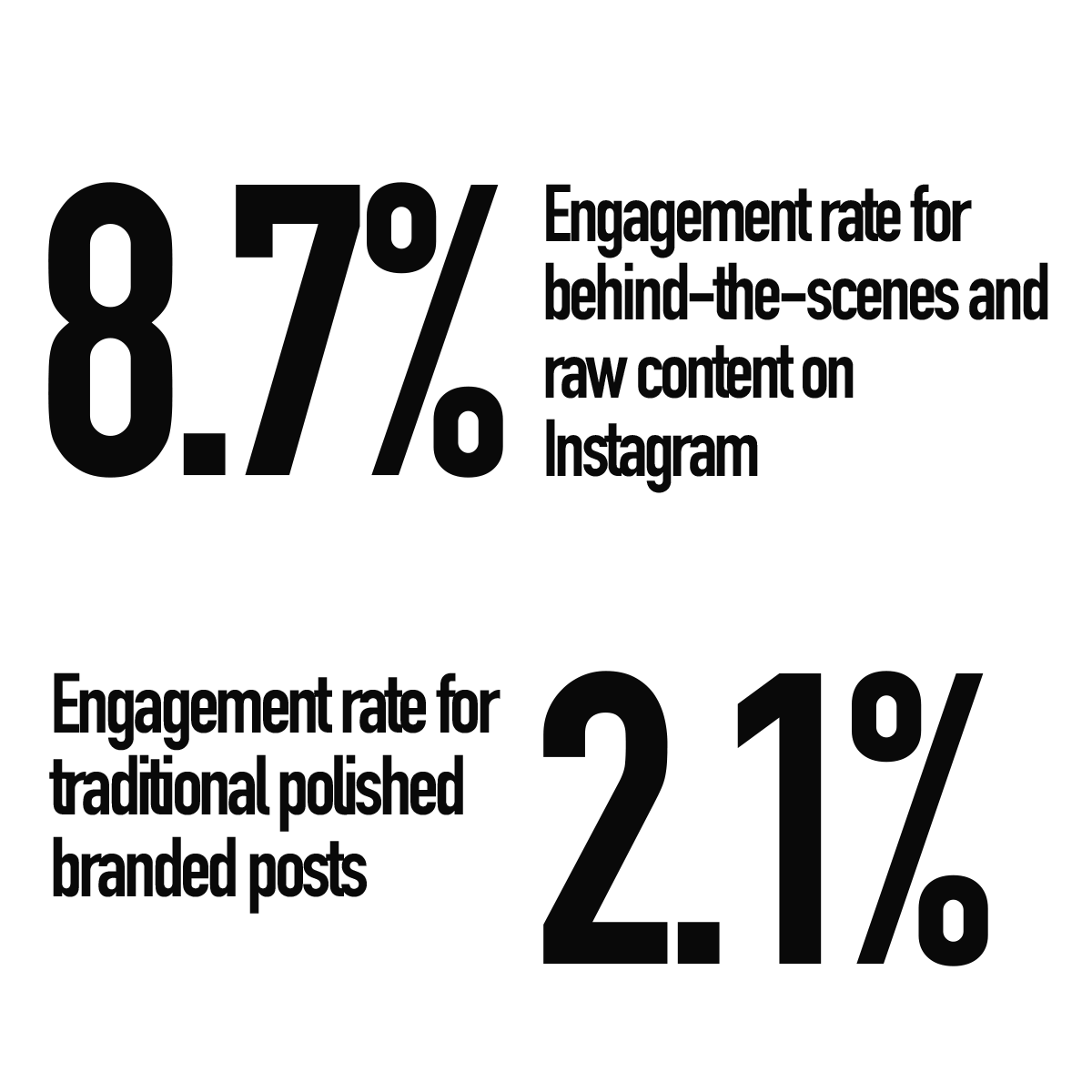
That’s a 4x difference.
Not a rounding error,
a revolution.
77% of consumers say they’re more likely to engage with content that feels genuine and relatable than content that looks polished and perfect.
Why ‘Perfect’ Stopped Working
Something strange happened in the last two years. The more tools we got to make content look flawless, the less people trusted it. Here’s why:
1. The AI Flood Changed Everything
When anyone can generate a photorealistic image in 30 seconds, visual perfection becomes meaningless. Your audience can’t tell if that beautiful sunset shot was captured on location at 5am or typed into a prompt at midnight. And when they can’t tell, they stop trusting.
Mosseri put it bluntly: Instagram will now actively prioritise “raw, real human content” over AI-generated material. The platform is literally rewarding imperfection in its algorithm.
2. Consumers Became Allergic to “Corporate”
There’s a reason behind-the-scenes content gets 4x the engagement. 92% of consumers trust content created by real people more than polished brand advertisements. They’ve developed a sixth sense for anything that feels manufactured. The slick corporate video with the stock music and the smiling-into-the-distance shots? They scroll past it in 0.3 seconds.
3. UGC Started Eating Professional Content Alive
User-generated content now outperforms brand-produced content by almost every measure:
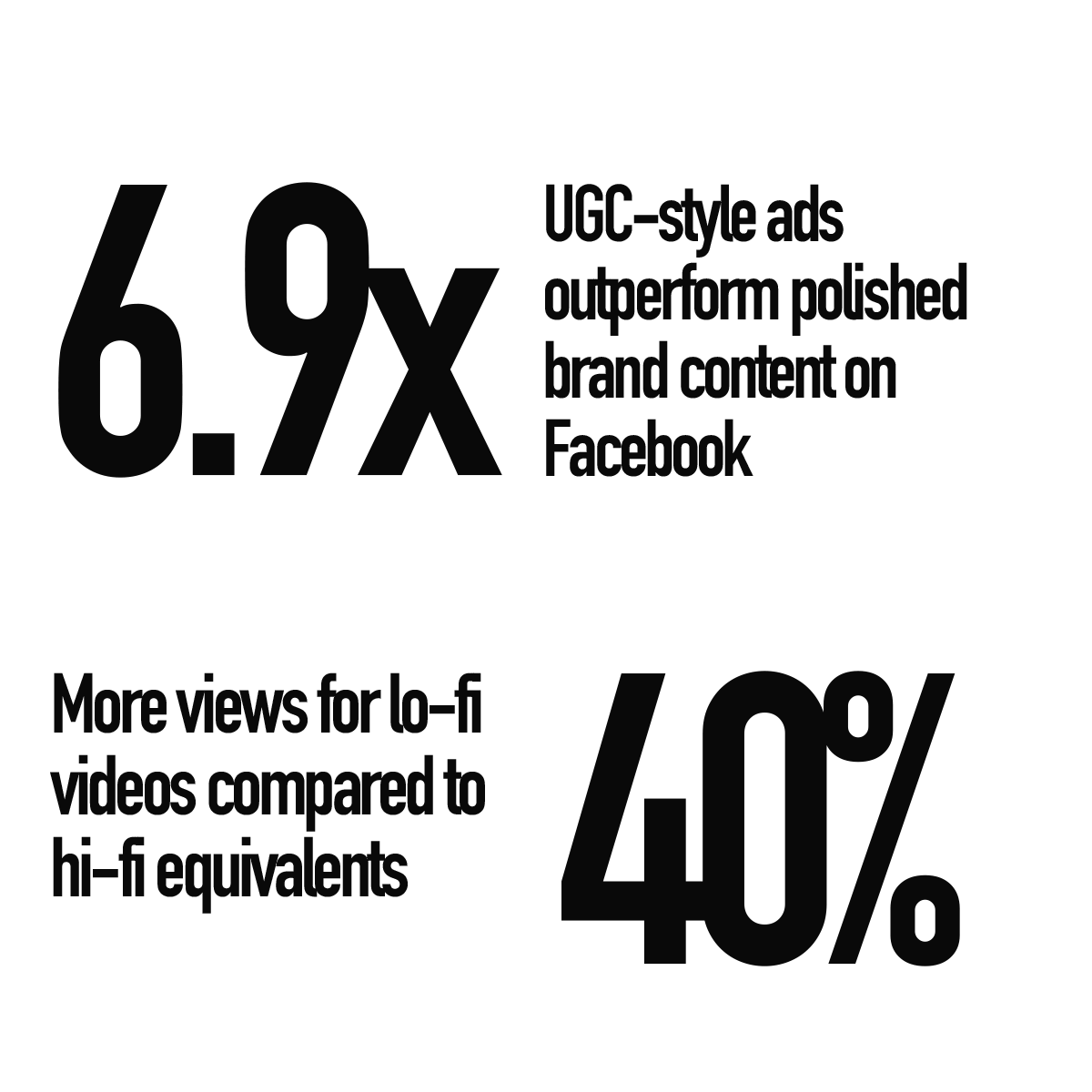
For marketing managers,
those numbers are terrifying
or liberating, depending on how
you look at them.
I noticed the shift in my own analytics.
I’d been posting Instagram carousels and experimenting with the format and what I found surprised me. The posts that tripled my normal views and engagement weren’t the ones with the most polished shots. They were the ones that combined two static photographs with a single short video clip, under twelve seconds. Three slides. That’s it.
I think it’s a sensory thing. Your audience scrolls through a striking photograph, then another photograph, and then suddenly there’s motion — the video hits differently because the still images primed them for it. You’re combining senses: the contemplative quality of photography with the energy of moving footage. It’s not just content. It’s an experience.
Wait. So Should Everyone Just Use Their Phone?
No. And this is the part most people get wrong.
The “unpolished revolution” isn’t about making worse content. It’s about making content that feels more human. There’s a massive difference between those two things.
The goal isn’t ‘less professional.’ The goal is ‘less artificial.’ And getting that right is harder than it looks.
Here’s what actually happens when a brand hands their intern an iPhone and says “just make it look authentic”:
Audio is terrible. Viewers bounce in the first 3 seconds because they can’t hear the speaker over background noise.
Lighting is inconsistent. One video looks decent, the next is a silhouette. The brand’s content library looks like it was made by 15 different people.
Colour is all over the place. The brand’s reds look pink in one shot and orange in the next. There’s no visual through-line.
There’s no story. The footage exists, but it doesn’t go anywhere. It’s content for the sake of content.
This is where the craft comes in. The best “unpolished” content in 2026 is actually made by people who understand light, sound, colour science, and story structure and then deliberately choose to let the edges stay rough.
The Jacquemus Proof
Here’s a perfect example. Jacquemus one of the world’s hottest luxury fashion brands — shot their entire Spring 2025 campaign on an iPhone 16 Pro Max. Not a phase one. Not an ARRI Alexa. An iPhone.
But here’s the bit people miss: it was directed by Simon Porte Jacquemus himself, someone with an extraordinary eye for composition and light. The tool was simple. The craft behind it wasn’t.
They also shot their entire Fall 2025 Paris Fashion Week show on iPhones. The creative director said it plainly: “Jacquemus, the brand, was built on an iPhone.” The result? Intimate, warm, authentic footage of workshop moments — bread being ironed, cats napping, birthday cake. Luxury that felt like real life.
The takeaway for marketing managers isn’t “buy an iPhone.” It’s that the aesthetic of authenticity requires intentional creative direction. Someone has to decide what ‘authentic’ looks like for your brand. And that’s a skill.
How to Create Content That Feels Raw (But Actually Isn’t)
This is the playbook we use at Aperture North. Professional tools, human results.
My main camera is a Lumix S5 — it shoots 4K in 10-bit colour, which gives me enormous latitude in post-production. I pair it with cinema lenses that produce a depth and character you simply cannot replicate on a phone. But here’s the thing: I run it as a stripped-back, run-and-gun rig. No dolly. No rails. No crew of six.
I keep the setup deliberately light. A big 99Wh V-mount battery means I can keep the camera powered on all day with every setting dialled in and ready to go. That matters more than most people realise, the best moments don’t wait for you to boot up and adjust your exposure. When Daniil glances out the window at dawn, when a client laughs mid-sentence, when the light hits a product at exactly the right angle for two seconds, you need to already be rolling.
My 75mm cinema len is a secret weapon for details. Close-ups of hands on handlebars, texture on fabric, the grain of a wooden table it produces a beautiful, creamy bokeh that draws your eye straight to the subject. That’s craft that separates professional “raw” from actual phone footage. The viewer doesn’t think “nice lens.” They think “that looks beautiful.” And that’s the point.
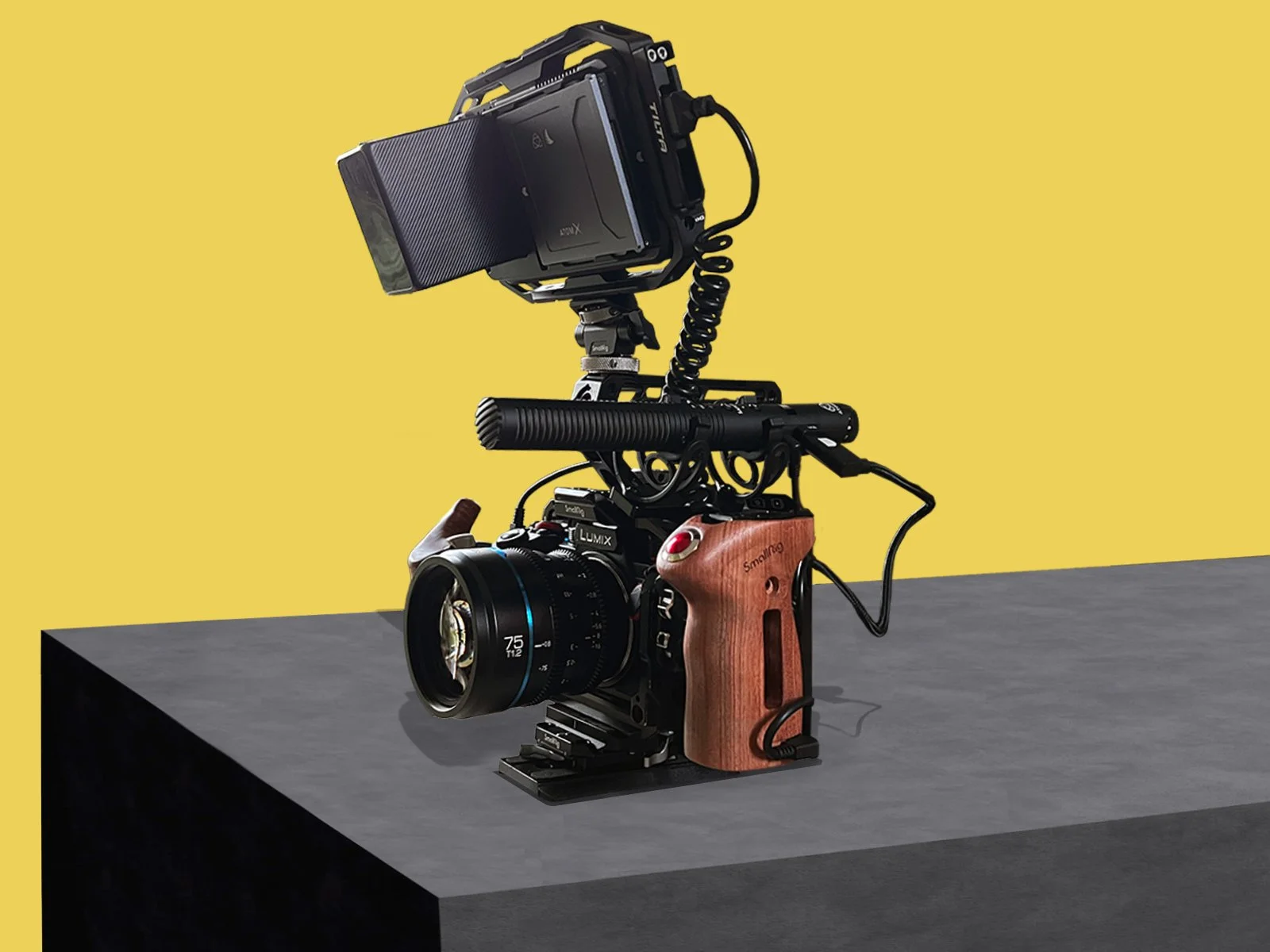
My Run and Gun Lumix Cinema Set up
1. Shoot for Feeling, Not for Perfection
The old brief was: “make it look expensive.” The new brief is: “make it feel real.” That doesn’t mean abandoning your craft. It means using it differently.
Handheld over tripod for 80% of shots. A subtle natural movement adds life that locked-off footage can’t match. Your cinema stabilisation handles the rest.
Natural light first. Window light, golden hour, practical lights in the room. Reserve the studio setup for the 20% of shots that genuinely need it.
Leave the ‘mistakes’ in. A glance off-camera, a half-laugh before a line, a moment of genuine thought. These are the moments that make content feel human. They’re also the moments a phone would miss entirely.
2. Audio Is the Secret Weapon
Here’s a truth most people don’t realise: viewers will forgive imperfect visuals. They will not forgive bad audio. A slightly shaky, beautifully lit talking-head video with crisp audio feels “authentic.” The same video with echo and background hiss feels “amateur.”
This is where professional equipment earns its keep. A shotgun mic, a wireless lav, even just knowing where to position the speaker relative to the room’s acoustics, that’s the invisible craft that separates “deliberately raw” from “actually bad.”
3. Colour Consistency Is Your Brand Thread
One of the biggest advantages of shooting 10-bit colour on a camera like the Lumix S5 is the latitude in post. You can create a consistent, recognisable colour grade across dozens of pieces of content and something that’s nearly impossible with phone footage.
Your audience won’t consciously notice the colour grade. But they’ll feel it. Every time they see content from the brand, it’ll feel “right” warm, consistent, like the same person made it. That subconscious recognition is worth more than any single viral clip.
4. Story First, Camera Second
The real difference between professional content and amateur content was never the camera. It was the story. A professional knows how to find the narrative in a 30-second clip:
What’s the tension? Even a product video needs a before and after, a problem and a solution, a question and an answer.
Where’s the human? Show the person behind the brand, the maker, the customer. Faces create connection.
What’s the one thing? Every piece of content should leave the viewer with a single takeaway. Not three. Not five. One.
The best example I can point to is the work I did alongside filmmaker Joe Norledge on “Beyond the Ride” for Trek Bicycle Corporation. The client brief was focused on the ride itself, the endurance, the landscapes, the performance. Standard stuff.
But the moments that ended up defining the project were the ones nobody asked for. I shot a custom-painted 80s Memphis-style Trek in a Welsh layby, just the bike leaning against a dry stone wall with a bare winter landscape behind it. The contrast between this wild, colourful frame and the muted, ancient stone was striking. It wasn’t planned. I saw it, I grabbed the camera, I shot it.
Same with the morning shots of Daniil — no lighting rig, no reflectors, just the soft natural light of a Welsh winter dawn. He was stretching, drinking coffee, doing nothing particularly “cinematic.” But those quiet, in-between moments gave the whole project its soul. They made it human.
None of those shots were on the brief. All of them were only possible because I was there, ready, with the right gear and the battery to keep rolling. That’s what a professional brings to “raw” content: the ability to recognise a moment and capture it properly, before it disappears.
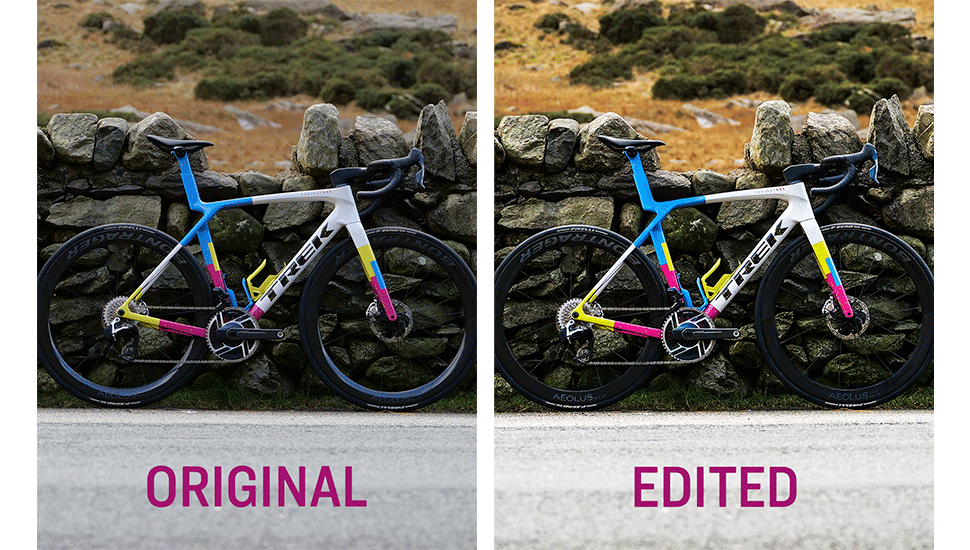
Trek Madone Gen 8 Project One - Untitled No25
What This Actually Means for Your Budget
If you’re a marketing manager reading this, here’s the honest conversation you need to have with your team:
The old model was: hire a production company, book a studio, spend two days shooting, wait three weeks for edits, get 4-6 polished videos. Use them for six months until they feel dated.
The new model is: hire someone who understands authentic content, shoot for half a day, get 15-20 clips in varying lengths and formats, vertical for Reels and TikTok, horizontal for YouTube and your website, raw behind-the-scenes for Stories. Refresh monthly.
The cost per piece drops. The output volume goes up. And the engagement goes through the roof.
But and this is critical “mobile-style” doesn’t mean “shot on mobile.” It means content that has the energy and immediacy of mobile footage, with the consistency and craft that only comes from someone who knows what they’re doing.
You’re not paying for the camera. You’re paying for the eye behind it.
The Brands Getting This Right
Jacquemus shot a luxury fashion campaign on iPhones — but with world-class creative direction. The content felt intimate and warm, not cheap.
On TikTok and Reels, the highest-performing branded content in 2025 was employee-generated content — “office outfit checks,” “get to know the team” videos, and spontaneous behind-the-scenes clips. Not because they were low effort, but because someone was there to capture the right moments.
Even EY’s 2026 media report calls it: the top theme for 2026 is “simplicity, authenticity, and the rise of experiences.” The brands winning aren’t the ones spending more on production. They’re the ones spending smarter, capturing real moments with real craft.
People sometimes ask me why I invested in cinema lenses and a 4K 10-bit camera if the trend is moving toward raw, unpolished content. It’s a fair question. Here’s my honest answer.
The gear doesn’t make the content look “professional” in the old sense, sterile, corporate, safe. It makes the content feel intentional. When I shoot handheld with a cinema lens, the image has a depth and warmth that a phone physically cannot reproduce. When I grade 10-bit footage, I can create a consistent look across fifty pieces of content that all feel like they belong together. When I use my 300mm to grab a close-up detail, the bokeh draws you into the frame in a way that feels almost intimate.
What I’ve learned is that the best “raw” content isn’t made by people with worse equipment. It’s made by people who know when to let go of perfection and lean into the moment. The camera is just there to catch it, properly exposed, properly focused, with audio that doesn’t make you wince. Everything else — the composition, the timing, the decision to keep rolling when something unplanned happens and that’s the craft. And that’s what I bring to every shoot.
The Real Question
Here’s what this all comes down to. The debate was never “polished vs raw.” That’s a false choice. The real question is:
Does your content make people feel something or does it just look like it should?
Because in 2026, the algorithm rewards feeling. Consumers reward feeling. And the brands that figure this out first will own their market.
You don’t need to throw out your production budget. You need to redirect it. Less time making things perfect. More time making things real.